
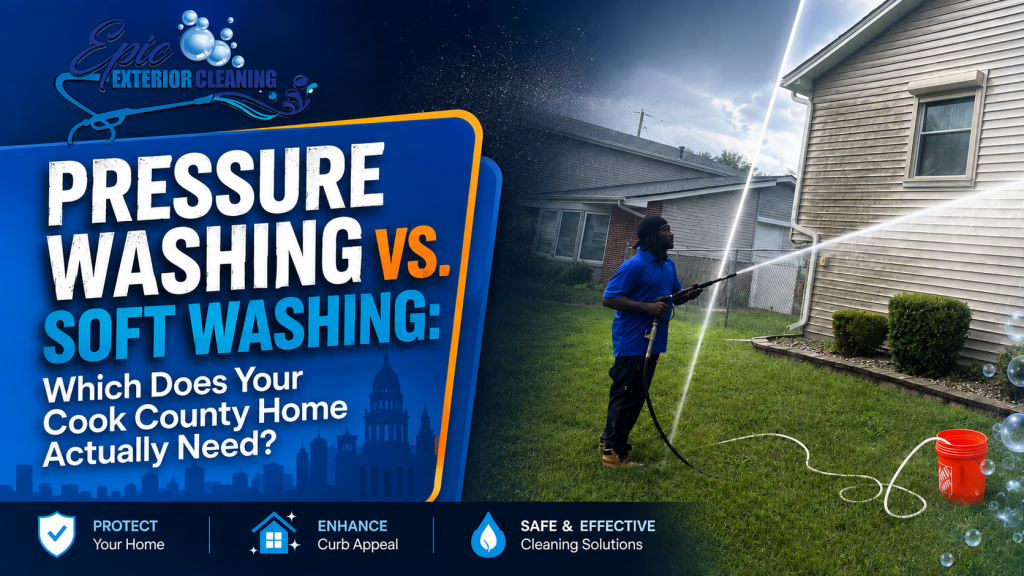
“Power washing,” “pressure washing,” and “soft washing” get thrown around like they mean the same thing. They don’t, and picking the wrong one can crack your siding or strip your roof.
We’re a local, owner-operated company based in Homewood, and house and window cleaning are what we do every week across Cook County. Most of the homes we clean in the South Suburbs are vinyl-sided, and our humid summers and freeze-thaw winters make the cleaning method matter more than most homeowners expect.
Here’s how each method works, and how to tell which one your home calls for.
What’s the Difference Between Pressure Washing and Soft Washing?
Pressure washing cleans with force. High-pressure water physically blasts dirt and grime off a surface, which works great on hard materials that can take the hit.
Soft washing cleans with chemistry. We apply a low-pressure cleaning solution, sodium hypochlorite with a surfactant (a soap that helps the mix cling and soak in), let it dwell, then rinse it off. Because the solution kills mold and algae at the root instead of just knocking it off the surface, the results last noticeably longer.
You’ll also hear “power washing,” which usually just means the water is heated. For cleaning a home’s exterior, the choice that matters is soft wash versus pressure wash.
| Soft Washing | Pressure Washing | |
|---|---|---|
| Pressure | Low, under ~500 PSI | High, ~1,300 to 3,000+ PSI |
| How it cleans | Solution kills mold and algae at the root, then gentle rinse | Water force blasts off dirt and grime |
| Best for | Vinyl and aluminum siding, roof shingles, wood, stucco | Concrete driveways, walkways, patios, brick |
| Main risk if misused | Minimal when done right | Cracked siding, water behind panels, stripped roof granules |
| How long results last | Longer, growth is killed at the source | Shorter, surface growth returns faster |
Signs Your Home Is Due for a Wash
Before you worry about which method to use, it helps to know when your home actually needs cleaning. A few common signs tell you it’s time.
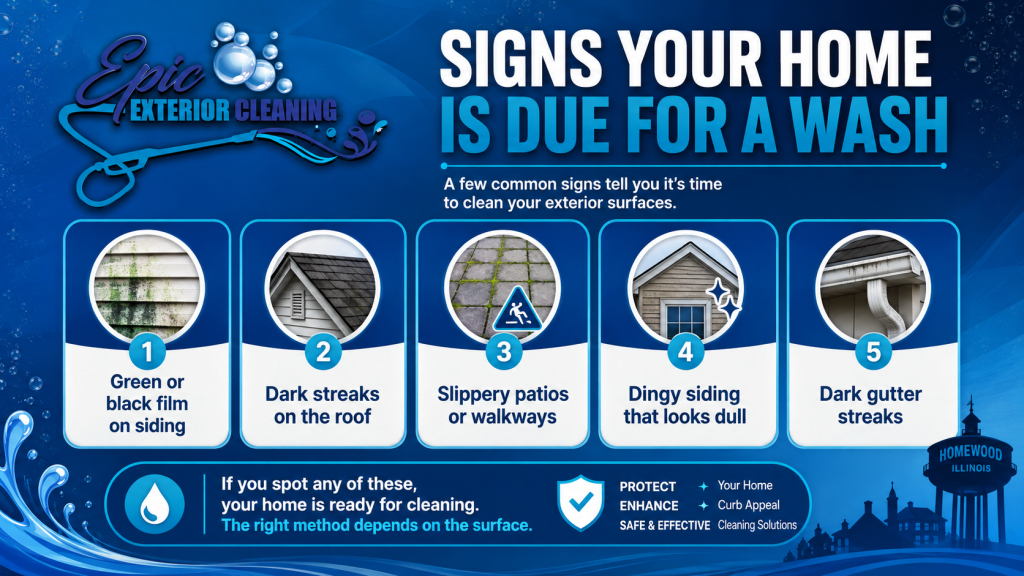
- Green or black film on siding. That tint is usually algae or mildew, and it shows up first on shaded, north-facing walls where moisture lingers.
- Dark streaks running down the roof. Those streaks are algae growth, not dirt, and they make a roof look far older than it is.
- Slippery walkways or patios. A slick film on concrete is organic growth holding moisture, which becomes a real slip hazard once it freezes.
- Dingy siding that’s lost its color. Spring pollen, road dust, and general grime dull the exterior faster than most homeowners expect.
- Dark streaks on the outside of your gutters. That oxidation staining on the gutter faces makes an otherwise tidy home look neglected.
Spot any of these and your home is ready for a cleaning. The method it needs comes down to the surface.
Which Method Does Each Part of Your Home Need?
Here’s how the common parts of a Cook County home break down.
- Siding: soft wash. Most homes in the South Suburbs are vinyl, with aluminum, brick, wood, and metal also common. Vinyl flexes and has overlapping seams, so high pressure can crack the panels or drive water behind them. Our soft-wash house washing cleans it safely.
- Aluminum siding: soft wash with a hand-brush. Aluminum oxidizes over time, which leaves that chalky film. We hand-brush aluminum with a soft-bristle brush and the right chemistry rather than pressuring it. One honest note: a soft wash removes dirt and algae, and heavy oxidation is best handled with a separate, light-touch service.
- Roof: soft wash only. Those black streaks running down your shingles are algae, not dirt, and our roof cleaning kills them at the root. High pressure strips the protective granules off asphalt shingles, and GAF, the largest shingle manufacturer in North America, specifically tells homeowners not to power wash shingles because it can dislodge granules and lead to premature failure. We only clean walkable asphalt-shingle roofs, and we inspect first.
- Driveways, walkways, and patios: pressure wash. Concrete and pavers are durable, so our driveway and concrete cleaning uses a surface cleaner for an even, streak-free finish. We also see fewer big concrete driveways here than in other regions. Porches, walkways, and backyard patios are the more common flatwork.
- Decks and fences: matched to the material. With deck and fence cleaning, wood gets a cleaner and, if you want it, a brightener to restore the look, while composite gets a milder soap and a soft-brush approach. Either way, we keep the pressure controlled to protect the boards.
| Surface | Right Method | Why |
|---|---|---|
| Vinyl siding | Soft wash | High pressure cracks panels and forces water behind seams |
| Aluminum siding | Soft wash + hand-brush | Prevents damage and gently addresses oxidation |
| Brick | Soft wash / controlled pressure | Protects mortar joints |
| Asphalt shingle roof | Soft wash only | Pressure strips protective granules and shortens roof life |
| Concrete driveway, walkway, patio | Pressure wash (surface cleaner) | Durable, gives an even finish |
| Wood deck or fence | Controlled clean + optional brightener | Cleans without gouging the wood |
| Composite deck or fence | Mild soap + soft brush | Avoids damaging the composite |
Can You Do This Yourself?
You can rent a pressure washer, and the exterior of your home is usually where the do-it-yourself route gets tricky. A lot of the siding and roof repairs we get called out for started with a rented machine.
A consumer pressure washer often puts out enough force to damage the very surfaces you’re trying to clean, and that damage doesn’t always show up right away. That’s how water ends up behind siding panels weeks later.
Soft washing is less about the machine and more about the chemistry. Mixing the solution at the right strength for each surface and rinsing it correctly takes practice, and the right approach keeps your plants and siding protected throughout.
Cleaning your own patio or a low, easy-to-reach fence is reasonable for a lot of homeowners. Siding, roofs, and anything that puts you on a ladder are where hiring a pro pays off, both for the safety and for protecting surfaces that are expensive to replace.
Why the Right Method Matters More in Cook County
Our local climate is exactly why choosing correctly protects your home instead of damaging it.

Humid summers create ideal conditions for mold, mildew, and algae on siding and decks, which is why so many homes here need washing in the first place.
Shaded, north-facing walls and tree-heavy lots stay damp long after the rain stops, so growth comes back fastest in those spots. Soft washing reaches the root there, which keeps those shaded areas cleaner for longer.
Freeze-thaw is the local factor most people miss. Algae and mildew trap moisture against concrete edges, siding seams, and caulk lines. When that trapped water freezes and thaws through a Chicago winter, it chips concrete, widens hairline cracks, and opens gaps where water can get in. Cleaning the right way interrupts that cycle, so it isn’t only about looks.
Timing matters too. Exterior cleaning here runs spring through fall, since deep winter shuts outdoor work down. Late spring and early fall are the sweet spots, and pairing a wash with gutter cleaning before the freeze sets in keeps water moving away from the house through the wettest months.
Is Soft Washing Safe? Chemicals, Plants, and Where the Water Goes
Soft washing is safe for your home and your yard when it’s done right, and part of doing it right is handling the runoff responsibly.
Before we apply any solution, we pre-wet and protect the landscaping around the house, then rinse everything thoroughly afterward. Most homeowners simply keep pets inside while we work.
Where the water goes matters here more than people realize. In Cook County, stormwater is regulated by the Metropolitan Water Reclamation District and the Illinois EPA under the Clean Water Act, and wash water carrying cleaning solution shouldn’t run into storm or water drains. We direct our runoff onto grassy or wooded areas away from drains, the way a responsible local company should.
You also don’t need to be home for us to work, as long as we have access to the property and a water source.
Does a Clean Exterior Actually Add Value?
A clean exterior is one of the highest-return, lowest-cost improvements you can make, especially before selling.
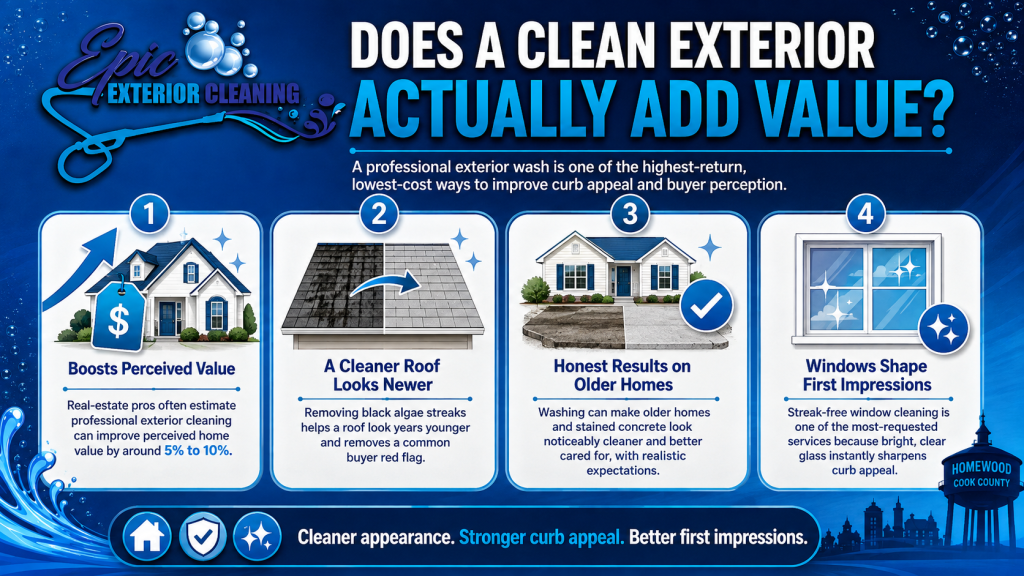
Real-estate professionals commonly estimate that professional exterior cleaning can lift a home’s perceived value by around 5 to 10 percent, though the exact figure varies by home and market.
A soft-washed roof is a good example. Removing those black algae streaks makes a roof look years younger and takes away a red flag buyers often read as “this roof is failing,” all for a small fraction of what a replacement costs.
We’ll always set honest expectations. On an older home, and the South Suburbs have plenty pushing 70 or 80 years, a wash makes the place look noticeably cleaner and better cared for. Older oil stains on concrete are the same story: we treat and brighten them so they look markedly better, and we’ll tell you up front what a realistic result looks like.
Windows are a big part of that first impression, and our streak-free window cleaning is our most-requested service for exactly that reason.
Frequently Asked Questions
How much does it cost to have my home washed?
Every home is different, so we give free estimates and price by home size and the surfaces involved. Most jobs start around a $200 minimum, and we handle the majority of quotes right over the phone. For a fuller breakdown, see what a wash costs in Cook County, and keep in mind that bundling services or getting on a recurring schedule brings the price down.
Can you pressure wash vinyl siding?
It’s possible, but a soft wash is the better call. High pressure can work panels loose over time, while a low-pressure clean lifts the grime and leaves the siding sitting right for years. You also get longer-lasting results because the growth is killed rather than just rinsed off.
How often should I have my siding or roof cleaned in the Chicago suburbs?
Most local homes do well with a house wash about once a year, and more often for shaded or heavily wooded lots where algae comes back faster. Spring and fall are the ideal windows.
Will soft washing get rid of mold and algae for good?
Soft washing kills the growth at the root, so it stays gone much longer than a pressure rinse would leave it. No cleaning is permanent, though, so regular maintenance is what keeps it from creeping back.
What’s the difference between power washing and pressure washing?
The main difference is water temperature: power washing uses heated water, and pressure washing uses water at normal temperature. Both rely on high pressure, which is why we reserve either one for hard surfaces and soft-wash the delicate ones.
Do you clean windows or walls above three stories?
We reach up to about three stories with a water-fed pole system, which covers the vast majority of homes in the area. Taller commercial or high-rise buildings are outside the scope of what we take on.
Get a Free Estimate in Cook County, IL Now
Whether your home needs a soft wash, a pressure wash, or both, we’re glad to take a look and tell you straight. We’re local, owner-operated, licensed and insured, and we back our work with a satisfaction guarantee. Most estimates are quick and handled right over the phone.
Call us at (708) 966-7922 to set one up, and ask about our seasonal maintenance plans if you’d like to stay on a schedule for windows and gutters.